July 25, 2026
Why Top Managers Coach in the Moment, Not in the Office
Why Top Managers Coach in the Moment, Not in the Office
Top managers do not save feedback for the office. They coach on the floor, in the moment, while the work is happening. Immediate, specific feedback is ten times more effective than delayed lectures. The four-step loop is simple: show them, watch them, let them do it, then give feedback. Each interaction takes thirty seconds and builds skills that last.
There is a scene that plays out in restaurants and retail shops every day. A manager watches an employee make a mistake during the shift. Maybe a server rings in an order wrong. Maybe a prep cook portions inconsistently. Maybe a receiver puts a delivery away in the wrong zone. The manager sees it, feels the frustration rise, and decides to address it later. "I will talk to them in the office after the shift," they think. "I do not want to embarrass them in front of the team."
The intention is good. The result is usually bad.
By the time the conversation happens, the moment is gone. The employee has forgotten the details of what they did. The context has evaporated. The conversation becomes abstract. "You need to be more careful with orders" is not coaching. It is a lecture, and lectures do not change behavior. They just create resentment.
Top managers do not save feedback for the office. They coach in the moment, on the floor, while the work is happening. They do not wait for a private meeting. They correct, demonstrate, and release in real time. This approach feels uncomfortable at first, especially if you were raised to believe that criticism should always happen behind closed doors. But the data on learning is clear. Feedback that is immediate, specific, and contextual is ten times more effective than feedback that is delayed, general, and removed from the action.
Here is why coaching in the moment works and how to do it without destroying morale.
Why is the shift floor the best classroom?
Most employee training happens in a back room or during an orientation session before the real work starts. The manager explains the procedure, the employee nods, and then they both go out to the floor where everything is louder, faster, and more complicated than the training version. The employee tries to remember what they learned, fails in small ways, and develops bad habits that get reinforced by repetition.
This is not the employee's fault. It is the fault of a training model that treats work as something you learn in a classroom and then apply in the field. In reality, the field is where the real learning happens. The shift floor is the classroom, and every moment of work is a lesson waiting to be taught.
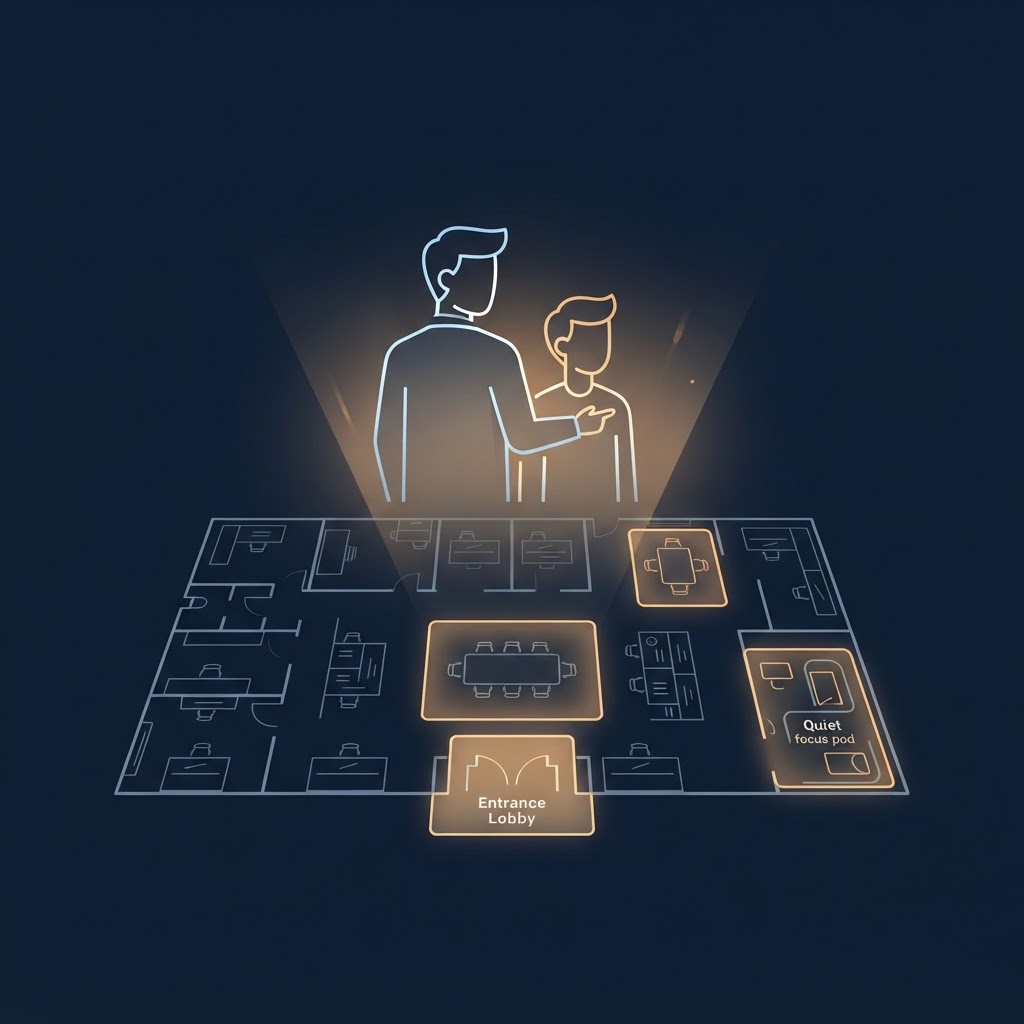
Top managers understand this. They do not separate training from working. They integrate them. When a server struggles with a new menu item, the manager does not schedule a training session for next Tuesday. They walk over, demonstrate the upsell right there at the table, and watch the server try it on the next customer. When a line cook is plating inconsistently, the manager does not write it up for a later discussion. They step in, show the correct portion, and let the cook execute the next plate while the memory is fresh.
| Element | Classroom Training | Floor Coaching |
|---|---|---|
| Timing | Before the shift, in a back room | During the shift, in real time |
| Context | Simulated, low pressure | Real customers, real stakes |
| Retention | Fades within hours | Sticks because it is tied to a moment |
| Correction speed | Delayed, abstract | Immediate, specific |
| Employee reaction | Nods and forgets | Fixes it on the next attempt |
The floor is where the stakes are real. The customer is waiting. The timer is running. The pressure is on. Learning in this environment is harder but stickier. The employee remembers the correction because it is tied to a specific moment with specific consequences. "I messed up that table's order, and the manager showed me how to ring it correctly right then" is a memory that lasts. "The manager told me in the office last week that I need to be more careful" is a memory that fades.
Why is in-the-moment coaching ten times more effective?
The research on skill acquisition is overwhelming. Immediate feedback is the single most powerful driver of behavior change. When feedback is delayed by even a few hours, the brain's ability to connect the correction to the action drops dramatically. When feedback is delayed by a day or more, it might as well be a different conversation entirely.
There are three reasons why in-the-moment coaching is so effective.
| Reason | Why It Works | What Happens When Delayed |
|---|---|---|
| Context is fresh | Employee sees the exact plate, ticket, or shelf | Memory fades, details blur, correction feels abstract |
| Stakes are visible | Customer is there, product is there, standard is there | Conversation becomes about the person, not the work |
| Demonstration is immediate | You show, they try, you give feedback, all in one loop | You can only describe, not demonstrate. The loop breaks. |
First, the context is fresh. The employee knows exactly what you are talking about because they just did it. They can see the plate, the ticket, or the shelf you are referring to. They do not have to reconstruct the moment from memory. The correction lands on fertile ground.
Second, the stakes are visible. When you coach in the office, the conversation feels personal. It is about the employee's character or attitude. When you coach on the floor, the conversation is about the work. The customer is right there. The product is right there. The standard is right there. The employee sees that you are not attacking them. You are protecting the standard.
Third, the correction can be demonstrated immediately. You do not just tell someone how to do something better. You show them. Then you watch them do it. Then you give feedback on their attempt. This show-watch-feedback loop is how skills actually develop. It cannot happen in an office. It can only happen in the moment.
How do you coach in the moment without humiliating anyone?
The biggest fear managers have about in-the-moment coaching is that it will turn into a public shaming. This fear is valid if you do it wrong. But coaching in the moment does not mean yelling across the dining room or humiliating someone in front of customers. It means brief, specific, private corrections delivered immediately.
| Element | What It Means | What It Does NOT Mean |
|---|---|---|
| Short | Ten to thirty seconds, one sentence | A ten-minute lecture in front of the team |
| Specific | Name the exact behavior and the fix | "You need to pay more attention" |
| Immediate | Before the employee moves to the next task | Saving it for the end-of-shift meeting |
| Private | Step aside, lower your voice | Broadcasting it across the floor |
| Supportive | End with encouragement to try again | Walking away without a path forward |
Short means ten to thirty seconds, not a ten-minute lecture. You see the mistake. You approach the employee. You say one sentence about what you observed. You demonstrate or describe the correct action. You release them to try again. The whole interaction takes less time than it takes to write a note for a later meeting.
Specific means naming the exact behavior, not the general attitude. "You rang that modifier as an add-on instead of a substitution" is specific. "You need to pay more attention to the POS" is vague. Specific feedback tells the employee exactly what to change. Vague feedback tells them that you are unhappy without giving them a path to improvement.
Immediate means right then, not later. If you see a mistake, you address it before the employee moves on to the next task. The longer you wait, the more the memory fades and the more the correction feels like a stored grievance rather than a teaching moment.
Here is what it sounds like in practice. A server approaches a table and forgets to mention the special. The manager is nearby. After the server walks away, the manager steps in quietly. "Good energy at that table. Next time, lead with the special. It is a high-margin item and the kitchen prepped extra. Try it on your next table and I will listen in." Thirty seconds. Specific. Supportive. The server tries it on the next table while the instruction is still ringing in their ears.
What is the most effective coaching loop on the floor?
The most effective coaching model on the floor is a four-step loop. Show them how to do it correctly. Watch them attempt it. Let them do it independently. Then give feedback on the result.
| Step | What You Do | How Long |
|---|---|---|
| Show | Demonstrate the correct technique. Do not just describe it. | 30 seconds |
| Watch | Observe their first attempt without interrupting. Silence is coaching. | 1-2 minutes |
| Let them do it | Step back. Let them perform independently on the next round. | Ongoing |
| Give feedback | Comment on the independent attempt. What improved? What still needs work? | 15-30 seconds |
Show means demonstration, not explanation. If a prep cook is dicing onions unevenly, do not describe the technique. Pick up a knife and show them. Let them see the motion, the grip, the rhythm. Most people are visual learners. A demonstration is worth a thousand words.
Watch means observing their first attempt without interrupting. Let them try it their way first, incorporating what they just saw. Do not jump in at the first mistake. Let them complete the action so they get the full experience of trying. Your silence during this step is coaching. It gives them space to process.
Let them do it means stepping back and allowing them to perform the task independently on the next round. If you hover forever, they never develop confidence. If you disappear immediately, they feel abandoned. The right balance is one supervised attempt, then one independent attempt with you nearby but not interfering.
Give feedback means commenting on the independent attempt. What improved? What still needs work? Be specific, be quick, and be honest. "Your knife grip is better. The pieces are still a little big. Aim for half that size and you are there." Then walk away and let them practice. Trust the repetition to do the rest.
This loop works for every skill. POS navigation. Customer greeting. Product rotation. Inventory counting. The format never changes. Only the content does.
How do you make coaching feel normal instead of punitive?
The reason employees fear in-the-moment coaching is that most managers only deliver it when something is wrong. The employee learns to associate the manager's approach with criticism. They tense up every time you walk over.
Top managers flip this dynamic. They coach constantly, not just when there is a problem. They praise good behavior in the moment with the same specificity they use for corrections. "That was a perfect upsell. You described the special, you answered her question, and you closed it naturally. Do that every time." This positive coaching builds trust so that corrective coaching feels like part of the same conversation, not an attack.
They also coach publicly when the feedback is positive and privately when it is corrective. A quick "great job on that table" across the floor reinforces the behavior for everyone. A quiet "let me show you a faster way to do that" next to the employee preserves their dignity while still delivering the lesson.
The goal is to make coaching so frequent and so normal that it becomes invisible. Employees stop seeing it as a special event and start seeing it as the background noise of a well-run shift. This is how high-performing teams operate. Feedback is not a meeting on the calendar. It is the air they breathe.
How do you build the habit of floor coaching?
If you are currently a manager who saves all feedback for the office, switching to in-the-moment coaching feels awkward. You will worry about embarrassing people. You will worry about not having time. You will worry about doing it wrong.
Start with one coaching moment per shift. Just one. Pick something small and positive. Praise a server for a good table touch. Compliment a cook on plate presentation. Thank a receiver for organizing the shelf correctly. Get comfortable with the physical act of approaching someone on the floor and saying something specific.
Once positive coaching feels natural, add one corrective moment per shift. Keep it small. A portion correction. A reminder about a procedure. A quick demonstration of a better way to load the dishwasher. Keep it under thirty seconds and end with encouragement.
Over time, increase the frequency until you are coaching five to ten times per shift. This sounds like a lot, but each interaction is only seconds long. Ten thirty-second coaching moments add up to five minutes of your shift. Five minutes that transform your team's performance.
Train your shift leads to do the same. When coaching becomes a team behavior instead of a manager behavior, the culture shifts. Peer coaching is often more effective than manager coaching because it happens more frequently and feels less hierarchical.
TrackItWeekly supports in-the-moment coaching by making inventory skills easy to demonstrate and verify on the floor. When your counting process is simple and visual, you can spot a mistake during a weekly count, show the correct technique right then, and watch the employee get it right on the next shelf. The app enforces consistency so your coaching is about judgment and attention, not about memorizing complex procedures. A trained team counts accurately, and an accurate weekly count gives you the clean data you need to coach on the numbers with confidence. Plans start at $19/month with a 14-day free trial. No credit card required.Think you know your inventory vocabulary? Prove it.
Six free games built for operators. No signup.