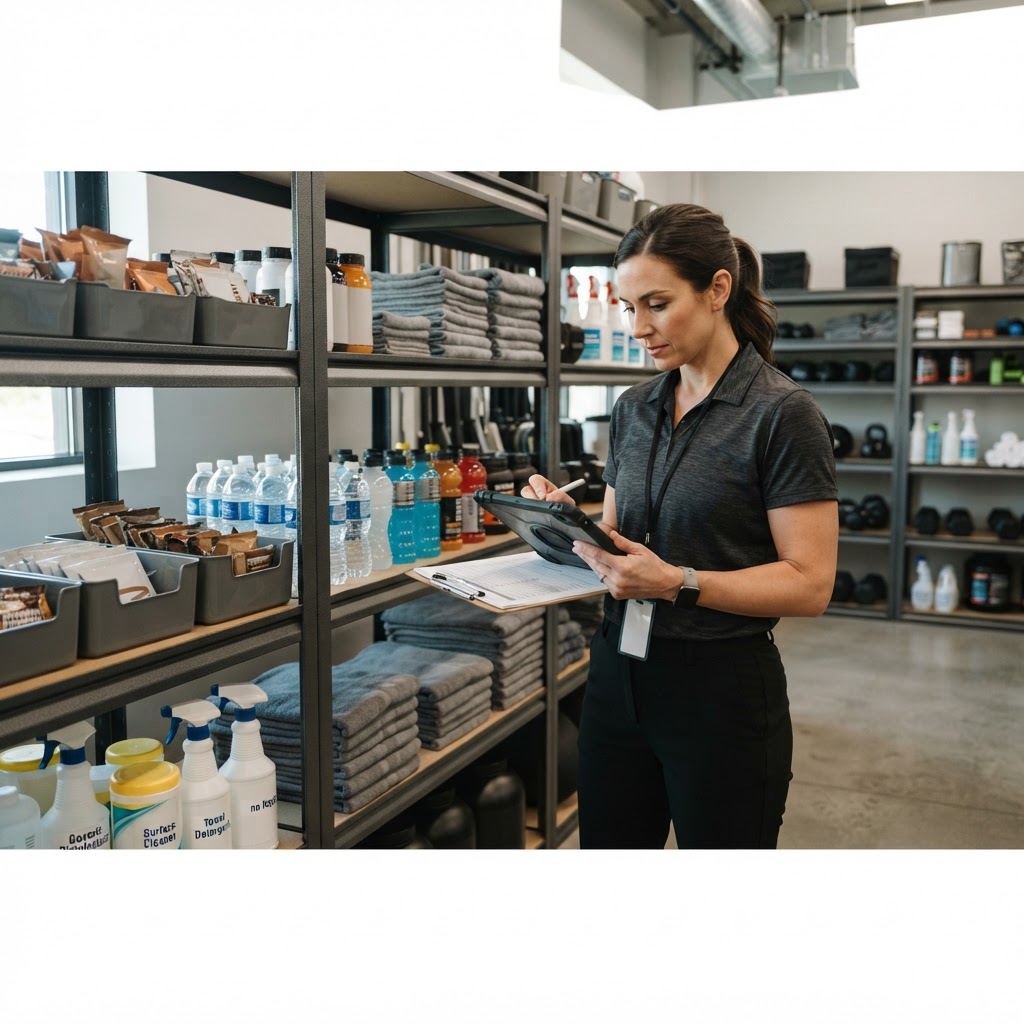
Gym Inventory Management: Keep Your Operation Running Smooth
Nothing frustrates a member more than walking up to the front desk and hearing you are out of their favorite protein bar. Gym inventory management is not about running a retail empire. It is about making sure the items your members expect are actually there when they need them.
What Gyms Actually Need to Track
Gym inventory is broader than most operators realize. It is not just the protein shakes behind the counter. It is everything that keeps the facility operational and the member experience intact.
Drinks and Supplements
Pre-workout drinks, protein shakes, energy drinks, and bottled water are your highest-turnover items. Members grab these on the way in or out. If you are consistently out of stock, they will start buying elsewhere. Track each SKU separately. Do not lump all drinks into one category.
Supplements like protein powder, creatine, and vitamins move slower but carry higher margins. They also have expiration dates. A weekly count helps you spot slow-moving inventory before it expires on the shelf.
Retail Items
Apparel, accessories, resistance bands, and gym bags are common retail items in gyms. These need their own PAR levels because they do not follow the same pattern as consumables. A shirt might sell two units one week and zero the next. Your ordering should reflect that variability.
Towels and Linens
If your gym provides towels, they are inventory. Count clean towels, dirty towels in the laundry cycle, and any backup stock. Towels walk out the door, get lost in lockers, and wear out. A weekly count tells you if you need to reorder or if your loss rate is climbing.
Cleaning Products and Consumables
Disinfectant spray, wipes, paper towels, toilet paper, and hand soap are not glamorous, but members notice when they are missing. Track these like any other inventory item. Running out of toilet paper on a Saturday morning creates a worse impression than being out of a flavor of protein bar.
Front-Desk Merchandise
Anything sold or given away at the front desk counts. Day passes, gift cards, promotional items, and samples. These often get overlooked because they do not feel like traditional inventory, but they have value and they need to be tracked.
Building a Weekly Counting Habit
The key to gym inventory management is the same as any other operation: consistency. A weekly count, done the same way every time, produces numbers you can trust. Here is how to set it up.
Pick your counting day. Most gyms do well counting on Sunday evening or Monday morning. This timing catches the weekend rush and sets you up for the week ahead. The specific day matters less than doing it on the same day every week.
Assign ownership. One person should own the count. They know where everything lives, they count the same way each week, and they catch variances that a rotating cast of counters would miss. Have a backup trained, but keep one primary counter.
Use consistent units. If you count protein bars by the unit, count them by the unit every week. If you count disinfectant by the bottle, do not switch to ounces next week. Inconsistent units make your history useless.
Count everything, every time. It is tempting to skip the slow movers or the items that never seem to change. Do not. Those are the items that surprise you when they finally run out. A complete count takes discipline, but it is the only kind that works.
Log before you order. Record your counts before you place any orders. This keeps your numbers honest and prevents you from subconsciously adjusting counts to justify an order you already decided to place.
Handling Shrinkage in Gyms
Shrinkage happens in gyms just like in retail stores. Towels disappear. Protein bars get eaten by staff. Retail items walk out the door. The difference between your expected inventory and your actual count is your shrinkage. A consistent weekly count is the only way to measure it accurately. Once you know your shrinkage rate, you can address it with better storage, staff training, or adjusted PAR levels.
PAR-Based Ordering for Gym Inventory
PAR levels keep you from over-ordering and from running out. For each item, your PAR is the amount you want to have on hand after your order arrives. It should cover your typical usage between deliveries plus a small buffer.
To find your baseline, average your weekly usage over the last four to six weeks. That average tells you how much you typically go through. Add a buffer based on your delivery frequency and how painful a stockout would be.
For drinks and high-turnover items, your buffer might be a few days of extra stock. For slow-moving retail, your buffer might be a week or two. The goal is to keep enough on hand to avoid stockouts without tying up cash in excess inventory.
Seasonal adjustments matter too. January brings new members who buy more supplements and apparel. Summer might spike drink sales. Your PAR levels should flex with these patterns. A system that applies seasonal multipliers automatically saves you from manual recalculation every few months.
How TrackItWeekly Fits Gym Operations
TrackItWeekly is built around the weekly inventory count. It is not a membership management system, a POS, or a full retail platform. It is a tool for operators who want a consistent, disciplined approach to counting and ordering.
Set up your item list once with your units and PAR levels. Each week, count what you have. TrackItWeekly calculates your rolling three-week usage average and suggests order quantities based on your PAR settings. Color coding shows you at a glance which items need attention.
You can set different PAR multipliers for different times of year. A 1x multiplier for normal weeks, 1.5x for busy periods, 2x for New Year rush. The system adjusts your suggested orders accordingly. You review and finalize before submitting.
Barcode scanning works for packaged retail items or anything with an existing barcode. You can count offline in areas with poor connectivity and sync when you are back online. For operators with multiple locations, you get visibility into counts and orders across all gyms from one place.
TrackItWeekly starts at $19 per month. It does not integrate with your gym management software or your POS. It does not automatically place orders with suppliers. It gives you a clean weekly workflow that produces reliable numbers, and reliable numbers make every other decision easier.
Get your gym inventory under control
Start a consistent weekly counting routine with TrackItWeekly and stop guessing what to order.
Frequently Asked Questions
What inventory should a gym track?
Gyms should track drinks, supplements, retail items like apparel and accessories, towels, cleaning products, consumables like paper towels and toilet paper, and front-desk merchandise. Anything members or staff use regularly should be on your inventory list.
How often should a gym count inventory?
A weekly inventory count works well for most gyms. Count on the same day each week before placing orders. High-turnover items like drinks and protein bars may need more frequent attention, but a full weekly count catches everything including towels and cleaning supplies.
How do you prevent theft of gym retail inventory?
Consistent weekly counts are your first defense. When you count regularly, discrepancies show up quickly. Combine counts with good storage practices: keep retail behind the desk or in a locked case, limit access to storage areas, and train staff to note anything unusual.
Can inventory software help a small gym?
Yes. Even a small gym with limited retail benefits from a structured weekly count. It prevents running out of popular items, reduces over-ordering, and gives you data on what actually sells. Simple inventory software that focuses on weekly counting and PAR-based ordering fits most gyms better than complex retail management systems.